
martes, 22 de noviembre de 2016

TIPS ON HOW TO WRITE A REVIEW
A review should…
– use interesting vocabulary.
– try to catch the reader’s interest.
– be clearly organised.
– use a neutral style, but you have to check who you are writing the review
for.
What should you do before you start review writing…
– be sure about what you are reviewing and its purpose
– check who will read it.
– decide what style you will use for your review.
– be careful not to follow a report style.
Useful language
1. introduction: say what you are reviewing.
– The (film, book…etc) I would like to review is…..
– The last Film I saw / book I read was…….
2. explain: give details of what you reviewing.
– It’s set in……….
– The story is based on (a book..) …..
– It’s about…..
– There are many memorable characters including ….
– The main theme of the film is…..
– What the film is saying is…..
3. opinion: give your own opinion of what you are reviewing.
– I would recommend this film to anyone.
– Although I enjoyed it, I would not recommend it for….
– It’s one of the best (shows) I’ve ever seen.
– Although I am not normally keen on (musicals), I am glad
that I decided to go.
– The (film) lifts you out of your everyday life.
DO`s
– DO say what it is about, but not in too much detail.
– DO remember to mention important or memorable characters,
but DON`T spend too much time just describing them.
– DO try to use a range of interesting vocabulary to bring
the film to life for the reader.
– DO remember to link ideas clearly, and to link paragraphs
together.
– DO remember to give your opinion clearly, as this is the
purpose of a review, but not until the end.
READING AND GRAMMAR HIGHLIGHTS: THE CANTERVILLE GHOST
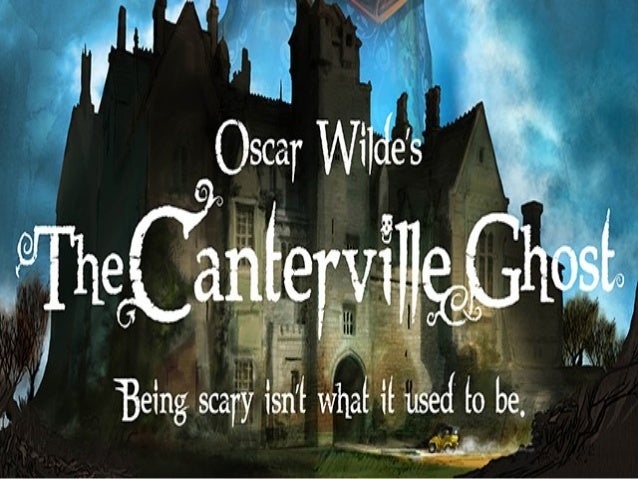
"The Canterville Ghost" is a short story by Oscar Wilde, widely adapted for the screen and stage. It was the first of Wilde's stories to be published, appearing in two parts in The Court and Society Review, 23 February and 2 March 1887.
The story is about a family who moves to a castle haunted by the ghost of a dead nobleman, who killed his wife and was starved to death by his wife's brothers.
Click the following link and you will be able to read (or download) the story while reviewing some useful grammar structures.
LINK TO THE CANTERVILLE GHOST
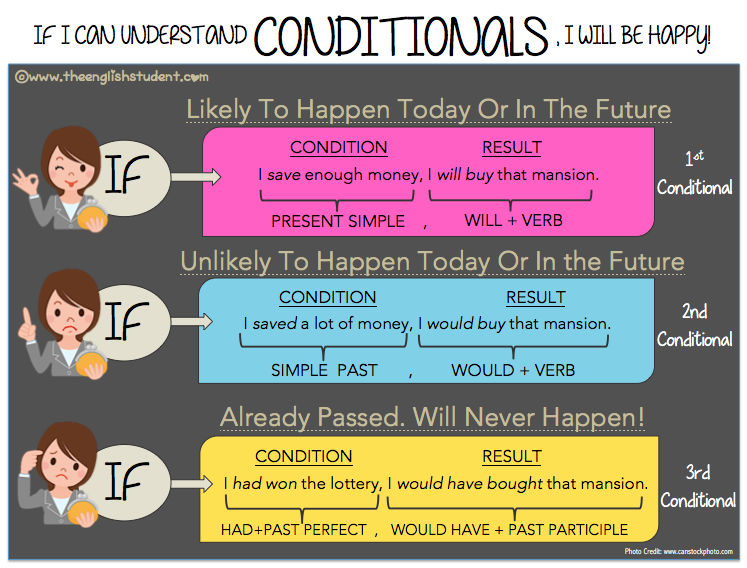
FOCUS ON THE ACTION! - THE PASSIVE VOICE
Subject + finite form of to be + Past Participle (3rd column of irregular verbs)
Example: A letter was written.
When rewriting active sentences in passive voice, note the following:
- the object of the active sentence becomes the subject of the passive sentence
- the finite form of the verb is changed (to be + past participle)
- the subject of the active sentence becomes the object of the passive sentence (or is dropped)

jueves, 10 de noviembre de 2016
ENGLISH IS A CRAZY LANGUAGE
There is no egg in eggplant, nor ham in hamburger; neither apple
nor pine in pineapple. English muffins weren't invented in England or French
fries in France .
Sweetmeats are candies while sweetbreads, which aren't sweet, are
meat.
We take English for granted. But if we explore its paradoxes, we
find that quicksand can work slowly, boxing rings are square and a guinea pig
is neither from Guinea nor is it a pig.
If teachers taught, why didn't preachers praught?
If a vegetarian eats vegetables, what does a humanitarian eat? If teachers taught, why didn't preachers praught?
Sometimes I think all the English speakers should be committed to an asylum for the verbally insane. In what language do people recite at a play and play at a recital?
Ship by truck and send cargo by ship? Have noses that run and feet that smell?
How can a slim chance and a fat chance be the same, while a wise man and a wise guy are opposites? You have to marvel at the unique lunacy of a language in which your house can burn up as it burns down, in which you fill in a form by filling it out and in which, an alarm goes off by going on.
English was invented by people, not computers, and it reflects the creativity of the human race, which, of course, is not a race at all. That is why, when the stars are out, they are visible, but when the lights are out, they are invisible.
Article retrieved from https://web.cn.edu/kwheeler/English_hard_2learn.html
Suscribirse a:
Entradas (Atom)